
The word tonic comes from the Greek tonikos — relating to tension or tone. It’s a tiny linguistic detail that low key explains everything about how these herbs work and why they’re different from most of what we reach for when something feels off in the body.
Tonic herbs aren’t for acute conditions. They’re not crisis herbs. They’re used long-term, consistently, to gradually strengthen and restore a system - not to treat a symptom but to change the underlying condition that’s generating it. Maintenance, not intervention. The goal, in the simplest terms, is tissue that is ready.
Ready is a specific state. Healthy tissue isn’t relaxed or contracted — it’s maintaining a baseline level of activation that allows it to receive signals from the body and respond to them efficiently. That’s what tone actually means. And it can be lost in both directions. Tissue that loses tone becomes chronically lax: prolapse, heavy bleeding, poor gut motility. Tissue with too much tone becomes chronically hypertonic and spasmed: cramping, tension, pain that won’t resolve. Both are failure states of the same regulatory mechanism. The goal isn’t more contraction or more relaxation — it’s the capacity to move intelligently between them.
Tonic herbs work toward that state through several overlapping mechanisms, and it’s worth understanding each of them separately.
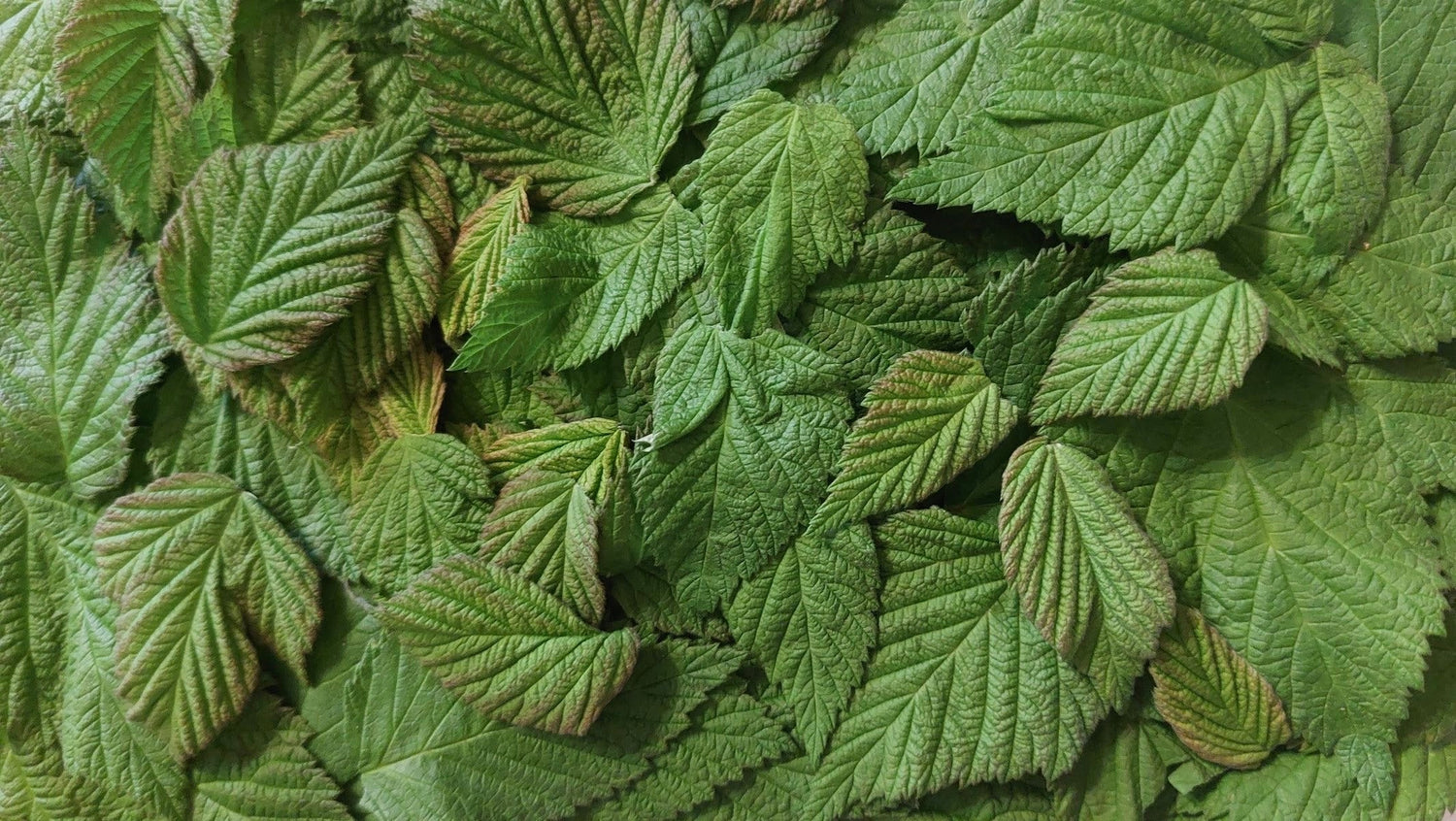
The most fundamental is nutrient density. Many of the herbs we classify as tonics — nettle, oatstraw, red clover, red raspberry leaf — are extraordinarily mineral-rich. This matters because you cannot have functional tissue tone without minerals. Magnesium is required for muscle relaxation. Calcium is required for contraction. Iron is required for oxygen delivery to the tissue doing the work. When these are depleted — which they frequently are, especially in people with heavy or irregular cycles — tissue loses its ability to regulate itself regardless of what else you do. Nutritive tonics work at this foundational level. They feed depleted tissue the raw materials it needs to function.
A second mechanism is astringency. Many tonic herbs contain tannins, which have a mild contracting effect on tissue proteins. Used consistently over time, this sends a repeated toning signal — a gentle, ongoing stimulus that encourages tissue to maintain higher baseline integrity.
A third category works through the nervous system rather than the tissue directly. Milky oats are used traditionally as a nervine trophorestorative to rebuild the nerve pathways that communicate with tissue rather than actually changing the tissue itself. When those communication channels degrade — from chronic stress, from burnout, from years of the nervous system running too hot — tissue stops receiving clear signals and loses its capacity to respond appropriately.
The thing all of these have in common is time. Tonic herbs are not acute herbs. Tissue remodeling is a slow biological process — collagen turnover takes three to six months. Uterine muscle tone shifts across multiple cycles, not one. You’re not changing a symptom. You’re changing the tissue’s baseline state. The herb has to be present consistently for that signal to accumulate into something structural. That’s a different relationship with a plant than most of us are used to — less dramatic, more like tending something than treating it.
Where to find tonic herbs at Tea Lady?
A few of these herbs are in our Cycle Syncing Teas if you want to explore them: red clover in the Follicular Phase Tea, red raspberry leaf in the Luteal Phase Tea and Moon Phase Tea, and red raspberry also in Sweet Spot for daily maintenance.